
Inside the Arizona Warrant System
A warrant in Arizona starts with a judge or magistrate who has authority over the case. The court clerk keeps the docket. Serving it is another job. County sheriffs execute county process. Constables serve papers in Justice Court precincts. Municipal police or city marshals handle many of the matters that come out of city courts. AZDPS adds state-level enforcement and a public search, but it never replaces the issuing court. Arizona's trial courts divide the caseload. The Superior Court has one court in each of 15 counties and handles felonies, with the Clerk of the Superior Court keeping those records. Justice Courts take misdemeanors, traffic, civil matters, and preliminary felony cases. Municipal Courts hear city ordinance, traffic, and misdemeanor cases. Each lower court's own clerk holds its docket. The current Arizona court system guide lists 185 Superior Court judges and 80 Justice Court precincts or justices. It lists 82 Municipal Courts with 142 judges. Those figures describe court structure, not warrant coverage. Use the County Directory to find local court and sheriff routes.
AZDPS Warrant Search Coverage Is Unpublished
The Arizona Department of Public Safety (AZDPS) runs a public Warrant Search built on information reported by “various courts throughout the State.” You enter a first name, a last name, and a date of birth. It returns no more than five results. The page names no participating courts. There is no date range, no county selector, and no full list of covered warrant types. A result is not a complete case file. The Arizona agency also warns that its data is not real time. Nothing there is represented as current, active, or complete. A match may still need identity and status confirmation, and AZDPS tells users to contact the court shown. A blank search proves nothing. Because the reporting roster and timing stay unpublished, a no-result Arizona search cannot rule out an open warrant. The issuing court remains the source for current status, bond, and recall.
Note: AZDPS publishes no participating-court list, so the statewide search cannot certify that no warrant exists.
Arizona Department of Public Safety Warrant Search
The official name-and-birth-date search is a limited lead from court-reported information, not a real-time statewide clearance.
Arizona Statewide Warrant Databases
“Statewide system” can mean several things in Arizona. The public AZDPS Warrant Search is one piece: a court-reported warrant channel. Judicial Public Access indexes court cases. TTEAP tracks qualifying traffic obligations that can trigger vehicle-registration holds. Law-enforcement systems serve a different audience. The public cannot query them. Keep the routes straight. The numbers or limits of one Arizona service say nothing about the coverage of another. A statewide tool may surface a lead or a related case, yet it shows neither every Arizona warrant nor a substitute for the clerk's confirmation of the court's own docket.
| System | What It Indexes | Run By |
|---|---|---|
| AZDPS Warrant Search | Court-reported warrant information; reporting courts and date range are not published | Arizona Department of Public Safety |
| Judicial Public Access | Case index from participating courts; not a warrant index or official court record | Arizona Judicial Branch |
| TTEAP | Qualifying delinquent traffic obligations linked to vehicle-registration renewal holds | Judicial Branch with participating courts |
| ACJIS and NCIC | Restricted criminal-justice information; not public self-search tools | Authorized agencies and the FBI |
| Issuing court docket | Case file, warrant, and current court action for that case | Superior, Justice, or Municipal Court clerk |
| Federal docket | Public federal case filings when available; not a current warrant-status search | U.S. District Court for the District of Arizona |
Arizona Public Access vs Warrant Search
The Arizona Judicial Branch's Public Access Case Information service is a case index, not an active-warrant database. Its page reports data from 177 of 184 courts across the state. Updates run weekly on Friday. The information runs through Wednesday. That 177-of-184 count belongs to Public Access alone. It says nothing about which Arizona courts report warrant information to AZDPS. AZDPS publishes no reporting-court list. Public Access is not the official record either. Not every case from a participating court shows up. Sealed matters, protection orders, mental-health and probate cases, victim or witness data, juvenile delinquency matters, and local-ordinance charges sit among the limits the portal describes. A case entry can point you to the right Arizona court. The clerk confirms the warrant itself. Arizona Public Access Case Information and the AZDPS warrant search answer different questions. Treat each only as a lead, then ask the Arizona court that issued the order.
Note: The 177-of-184 figure belongs to the Public Access case index; it does not measure AZDPS warrant reporting.
How Arizona County Warrants Reach the State
The judge or magistrate issues the warrant, and the issuing clerk keeps the docket. A local agency may then receive it for service. Some entries later reach the AZDPS public search. The public page explains no reporting rule. AZDPS posts no batch schedule, no required-reporting rule, and no list of participating Arizona courts. So it cannot be said that every Arizona court, county, or warrant category feeds the search.
Practical handoffs, not a guaranteed feed: Issuing court and clerk › serving agency for execution; separate court report, if submitted › AZDPS public search; restricted law-enforcement query › ACJIS / NCIC.
Arizona warrant work does not move in one clean step. The officer serves the order and files a report. Later, a judge may recall or quash it. Those are three separate events, and the public index can lag behind all of them. A search result shows none of the technical handoffs. When a name is missing or a hit needs confirmation, use the County Directory to reach the Arizona issuing court and the right local warrant channel.
Arizona TTEAP Tracks Holds, Not Warrants
Arizona runs a separate program for unpaid traffic matters. The Traffic Ticket Enforcement Assistance Program, or TTEAP, lets participating courts report a qualifying delinquent obligation for a vehicle-registration renewal hold after the required collection steps under A.R.S. §§28-1631 through 28-1636. The TTEAP Lookup Bot finds accounts or cases tied to that hold. It is not a warrant-status search. The Judicial Branch is clear on the limit: a TTEAP hold touches registration only. It does not affect a driver's license. A traffic case can carry a court warrant too, but the hold neither proves one exists nor clears one. Arizona does not publish a full roster of participating courts. So ask the issuing court what obligation remains, and confirm any warrant status, bond, or recall on a separate track. Paying can clear the registration flag on the program's stated timeline, yet it does not quash a judicial order by itself. The statute spells out the scope: A.R.S. §28-1632. Note: A TTEAP payment may clear a vehicle-registration hold without resolving a separate court warrant.
Fugitive Warrants and the US Marshals
A federal warrant is not an Arizona county warrant. Federal process comes from the U.S. District Court for the District of Arizona. The U.S. Marshals Service serves as the main federal warrant-execution agency. Federal dockets can show public case activity. PACER is not a warrant lookup, though, and sealed applications may not appear at all. For a federal case, go through the federal court or federal counsel. An Arizona county clerk is the wrong desk. The District of Arizona FAQ sorts out the federal court locations and divisions from the state-court routes. The page lays out which divisions sit where and how each route works.
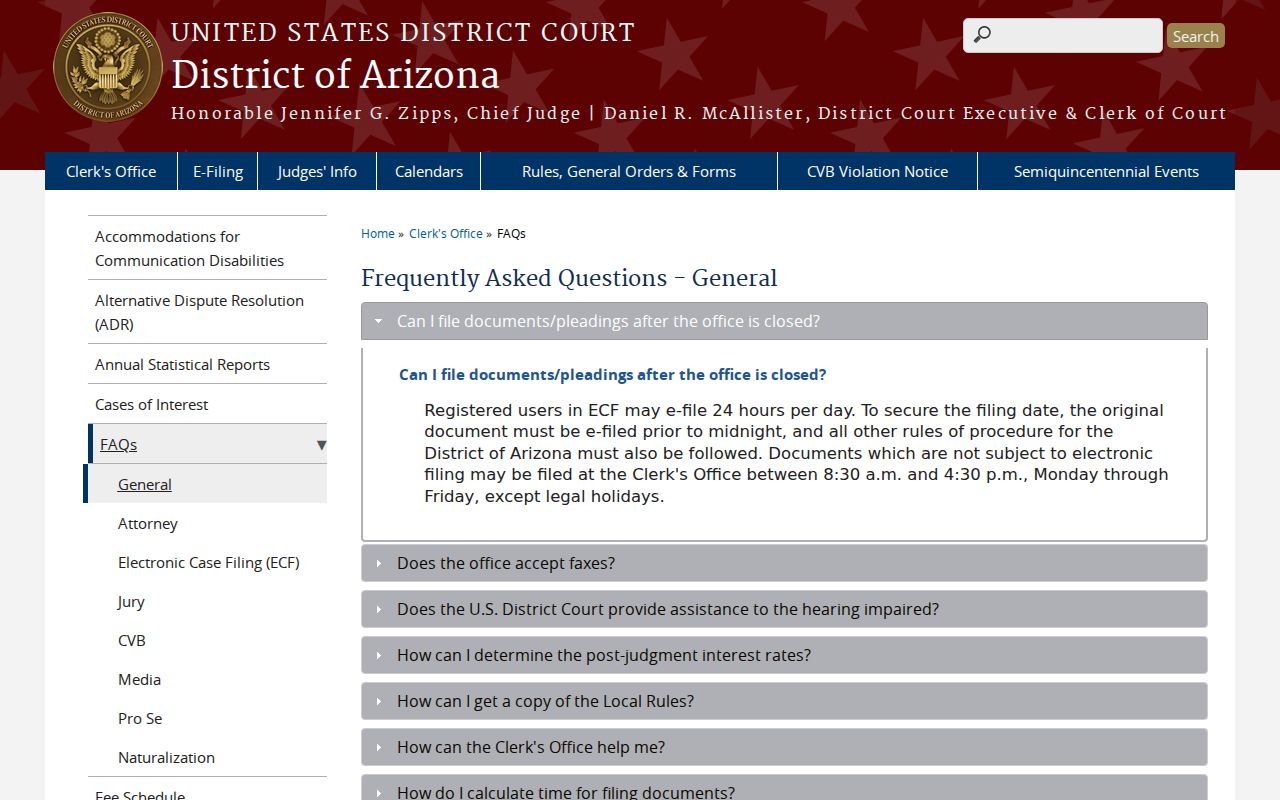
A federal division map shows court locations. It does not confirm a person's warrant or custody status. The U.S. Marshals District of Arizona runs fugitive task-force teams with federal, state, tribal, probation, and local partners from Phoenix, Flagstaff, Tucson, and Yuma. Its public tip line is 1-888-869-4589. It runs 24 hours. The Arizona WANTED Task Force is a separate AZDPS-linked partnership aimed at selected fugitives. A 2026 USMS report counted 22 partner agencies and more than 1,748 arrests in the prior year. That is task-force activity, not a tally of Arizona warrants. The PACER fee FAQ lays out the charges for federal docket access along with the waiver rules.
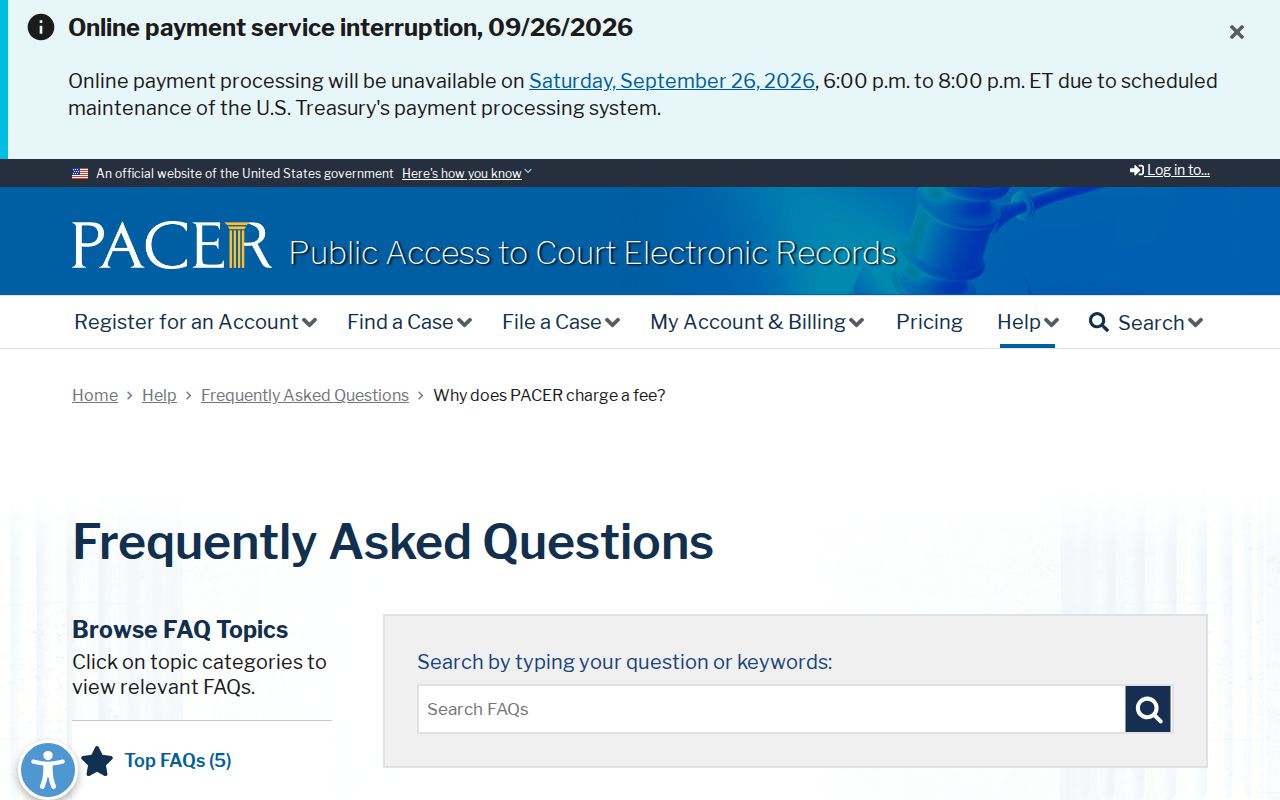
PACER is a federal case-docket service. It is not a public search of active arrest warrants. For an Arizona state or county warrant, status and recall stay with the issuing court. For a federal warrant or a fugitive tip, use the federal route, and never approach a person on a public notice. The USMS District of Arizona page describes the district's task-force work in detail.
Arizona's Ten-Court E-Warrant Trial
Arizona's electronic warrant work is still growing. Court technology plans for 2026–28 sketch a proof of concept covering 10 courts. Under it, court case systems would send warrant issue or quash transactions to a DPS-held interface for law-enforcement action. An execution update could then flow back to the court through its own case system. Those plans call it a limited project. They list further funding and local agency readiness as the hurdles to full statewide automation. This is not a public lookup. It replaces nothing. The AZDPS Warrant Search stays the public tool, and the plans do not show all Arizona courts connected, a statewide deployment date, or a complete coverage map. A court may run electronic processes internally while the public still calls the clerk for the status of a particular order. The cited 2026–28 court IT strategic plan describes the proof-of-concept and the funding broader work would need. Note: The 10-court proof of concept is not statewide live coverage and does not replace the public AZDPS search.
Arizona Statewide System vs County List
The statewide index and a local warrant record answer different questions. AZDPS displays what courts report. It offers no public participation list and no real-time update promise. A county court clerk keeps the docket and can confirm whether the judge's order is still active. A sheriff or other serving agency may know execution or custody details, but no agency holds the record of every warrant from every court tier. Local online access varies across Arizona. Some county agencies publish warrant tools. Others point the public to a court, a phone line, or a records request. Treat a missing result in one channel as nothing more. It is not statewide clearance. The County Directory routes readers to local court and sheriff information, while the issuing clerk remains the direct contact for status, bond, and recall. AZDPS also runs a public-record request portal for records it maintains. That is a request route, not a live warrant lookup. The portal page details how a records request to the department works and what it can return.
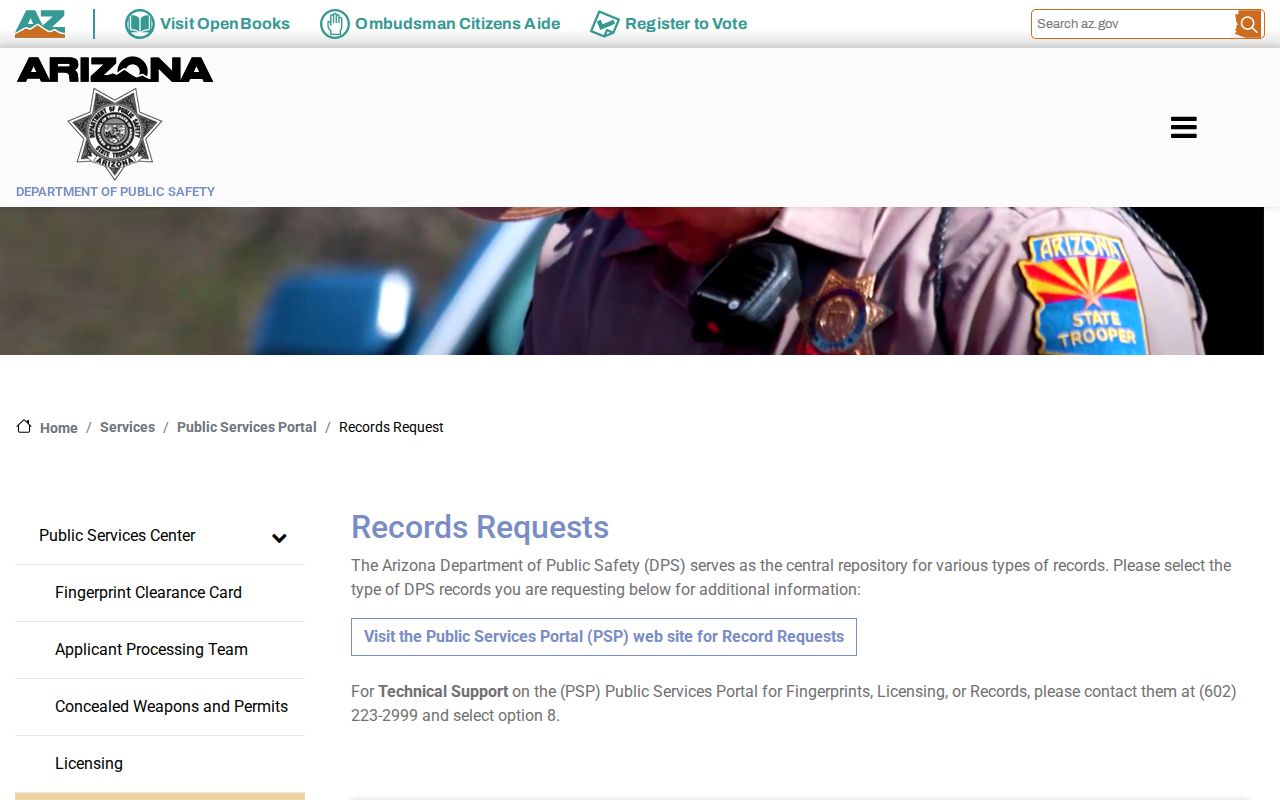
A request can seek an existing releasable record. For current Arizona warrant status, the issuing court is still the source.
| Feature | Statewide System | County Warrant List |
|---|---|---|
| Source | Court-reported data received by AZDPS | Issuing court docket and local agency records |
| Coverage | Unspecified reporting courts; no public completeness guarantee | Local jurisdiction; public online access varies |
| Current Status | Not represented as current or active by AZDPS | Issuing court confirms status, bond, and recall |
| Next Route | Contact the court named in a result | Use the clerk and, for service details, the proper sheriff or agency |
Arizona Pre-Charge Warrant Access
Arizona Supreme Court Rule 123 limits what the public can view remotely in some court records. A 2025 procedure went further for pre-charge warrants. It restricts access to request and issuance information until proof of service, expiration, quash, or a court order. That is why a public case index or warrant search may miss steps in a pending matter. A blank online result proves nothing about status. The Arizona limit belongs to the court record and its procedural posture. It is not a gap that another public search can fill. Emergency procedures were in effect while a permanent rule package was set for January 1, 2027. Read the current Arizona Rule 123 for the exact text. Then ask the issuing Arizona court directly what it can release. Note: a restricted pre-charge record may stay outside a public search even when law enforcement has an active matter.
Arizona DUI Search Warrants Are Separate
Arizona also runs a separate statewide electronic search-warrant program. Courts use it to order searches for evidence in impaired-driving investigations, such as bodily-fluid evidence in DUI cases. These are not arrest warrants. They say nothing about whether a person has an outstanding warrant, and they offer no public warrant-status lookup. Different tool, different job. In November 2025, the Arizona Supreme Court announced a grant to sustain the program and speed up evidence processing. That technology serves courts and law enforcement elsewhere in the warrant process. Do not confuse it with the limited electronic arrest-warrant expansion or with the public AZDPS search. The Supreme Court announcement covers that evidence-focused program.
Arizona Warrant Technology and History
Arizona's public tools did not launch together, and they do not share one record base. The AZDPS warrant page publishes no start date. It lists no vendor history, no participating-court roster, no record count, and no refresh schedule. Public Access updates its own case data weekly. TTEAP follows a statutory collection path for certain traffic obligations. Treat each service's dates and counts as separate facts about separate systems. A 2025 Arizona Judicial Council demonstration showed a newer TTEAP Lookup Bot. It let users view court fine information, email it, and pay online. The October 2025 meeting minutes record that demonstration. Still, it changed traffic-obligation access, not arrest-warrant search. The newer arrest-warrant proof of concept stays limited. It depends on funding and on readiness for statewide expansion. No official source describes one unified public Arizona warrant database with complete court coverage. So treat a statewide search only as a lead. Confirm through the exact court and the local serving agency. Arizona's digital tools can route information well. The judge's court still controls the order and its current status.